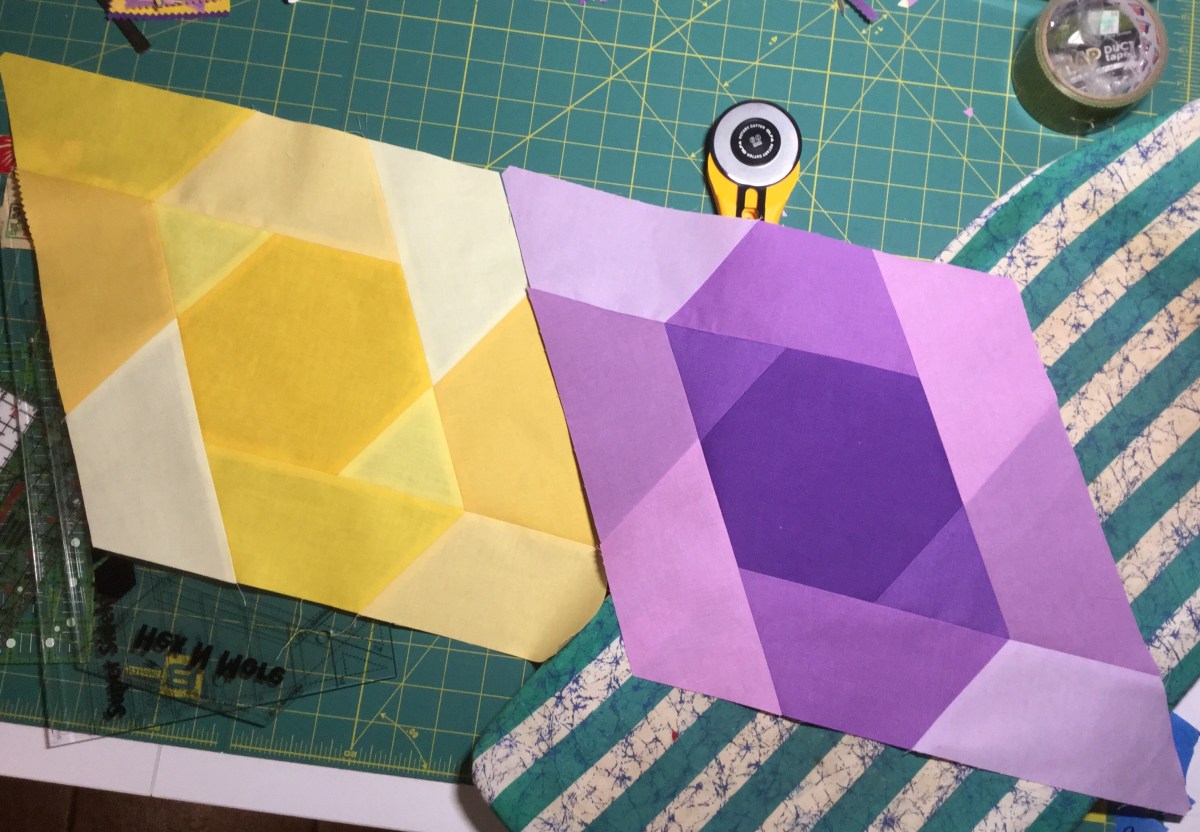
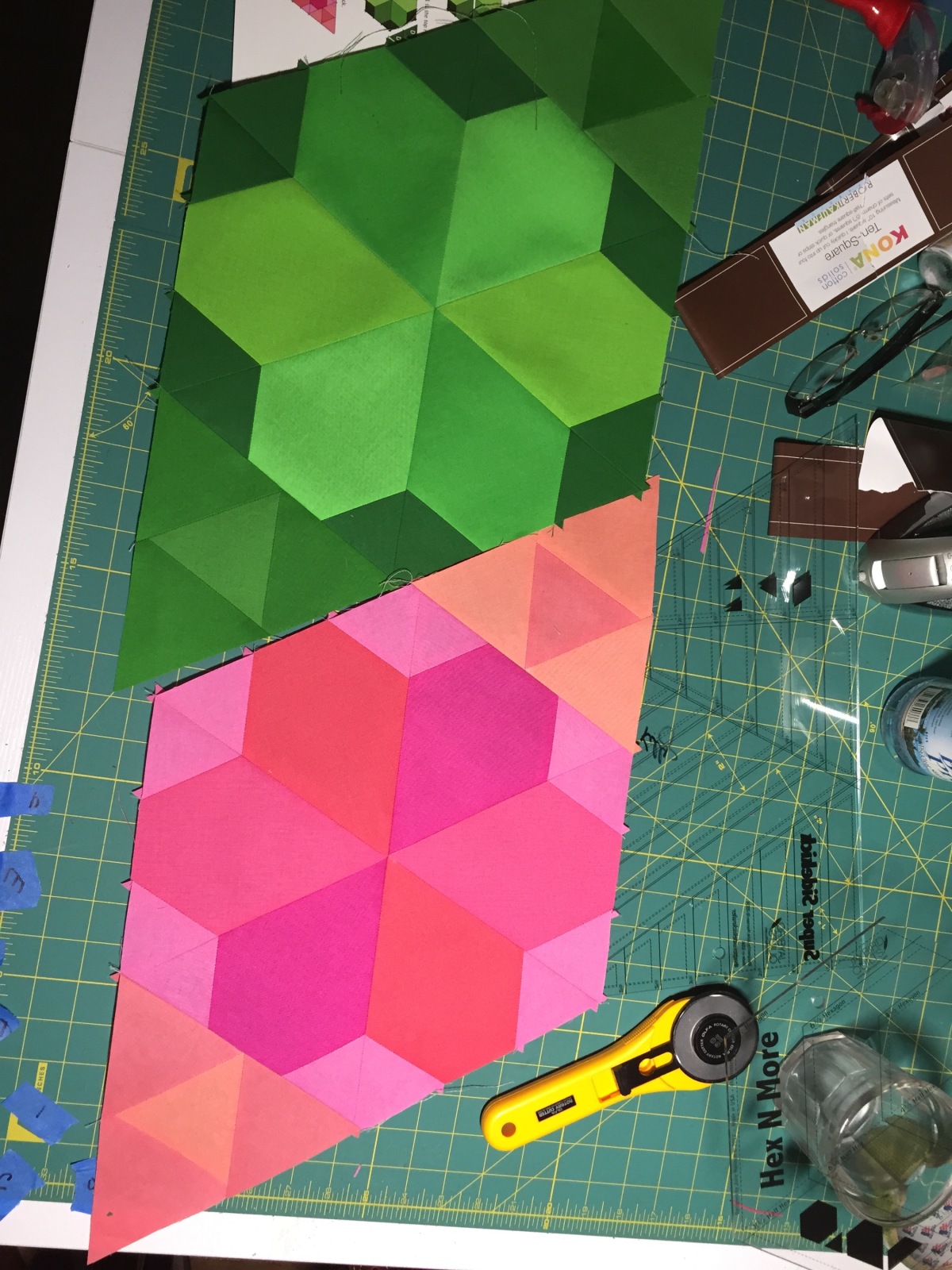
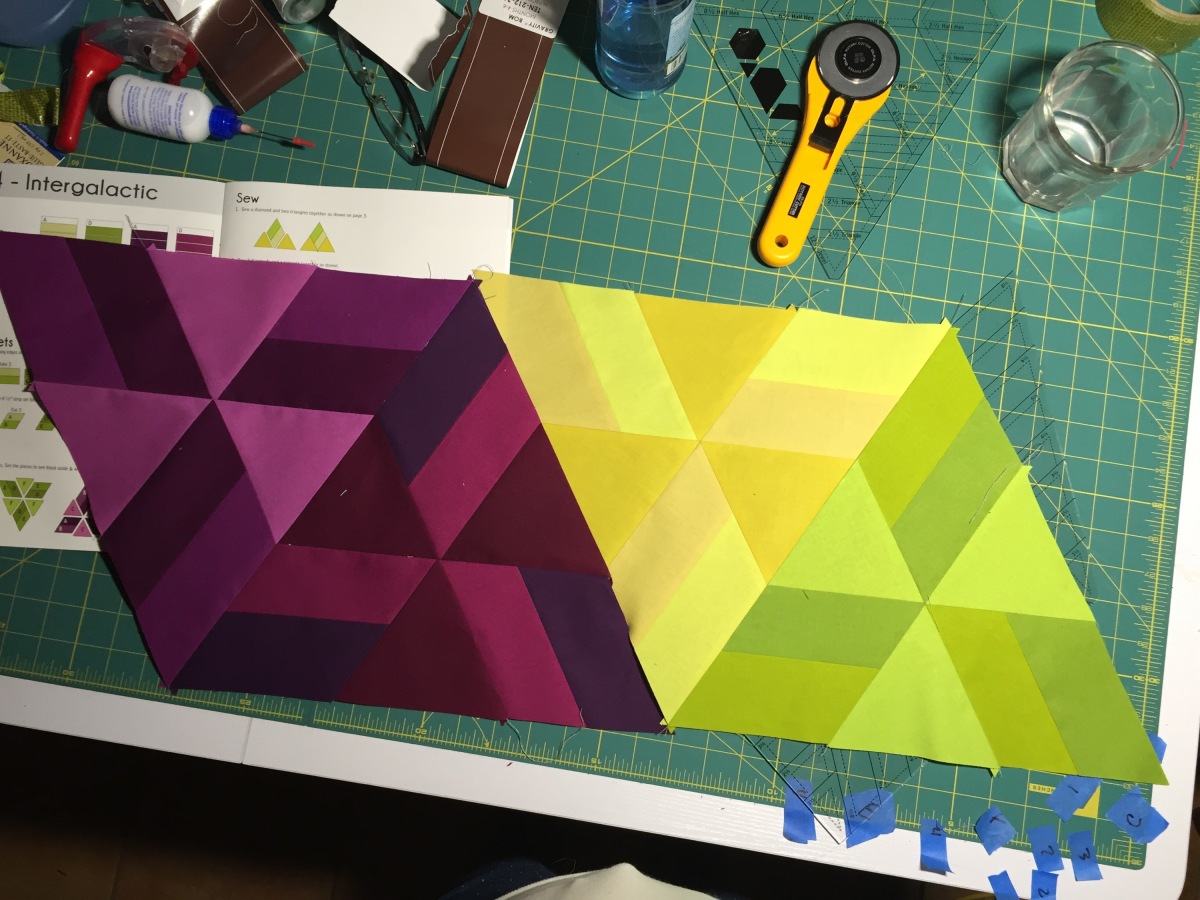
Gravity Quilt Block 7 – Cosmic

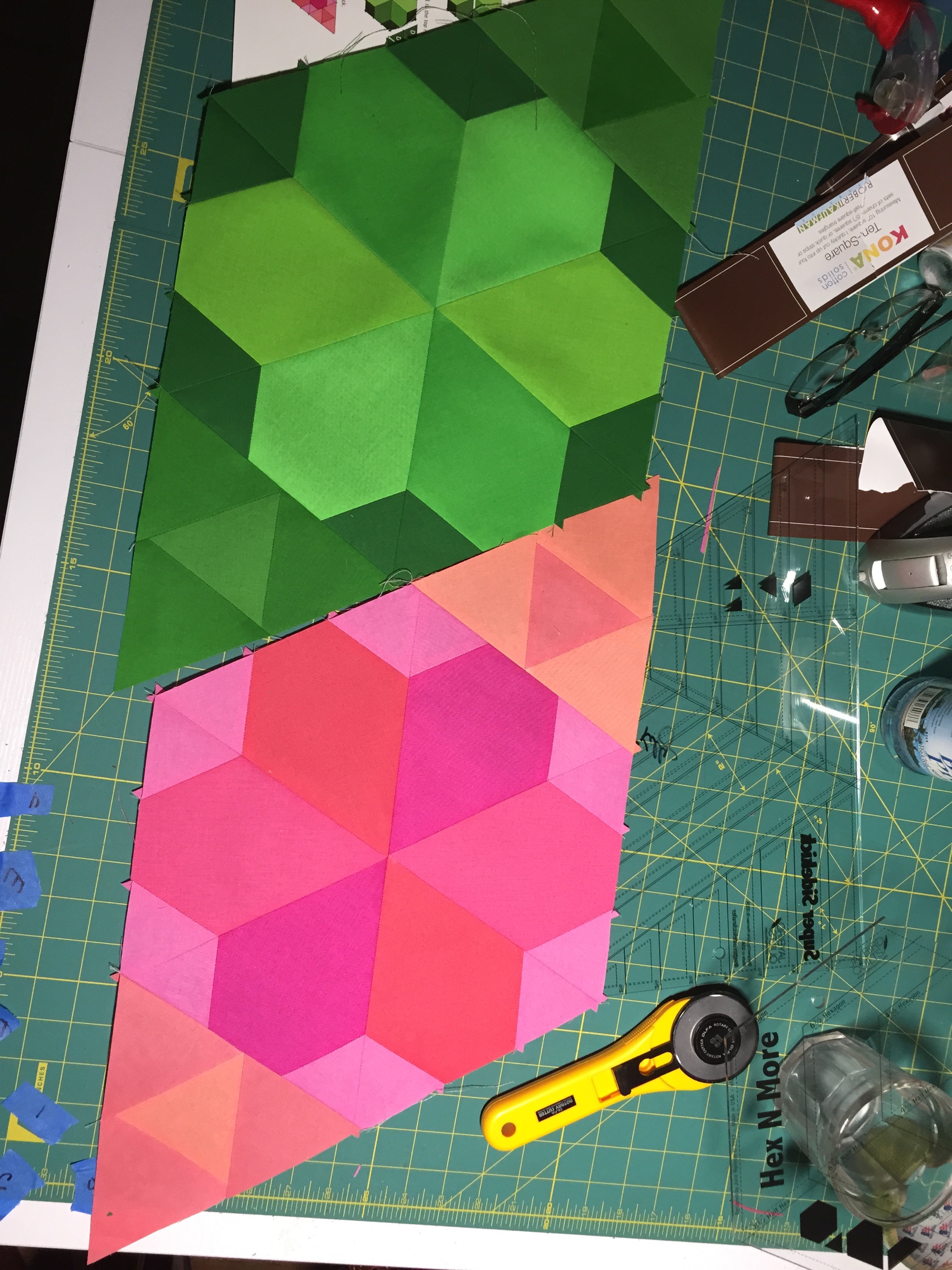
Volunteering at a sewing conference means I don’t get to sew, except in my room after dinner. The Jaybird Gravity Quilt pattern is plotted out very well. The skills you learn build upon the previous blocks. I am finding the instructions have been really well done. And, I am learning a lot. #GravityQuilt is not a boring kit, it’s actually fun. 

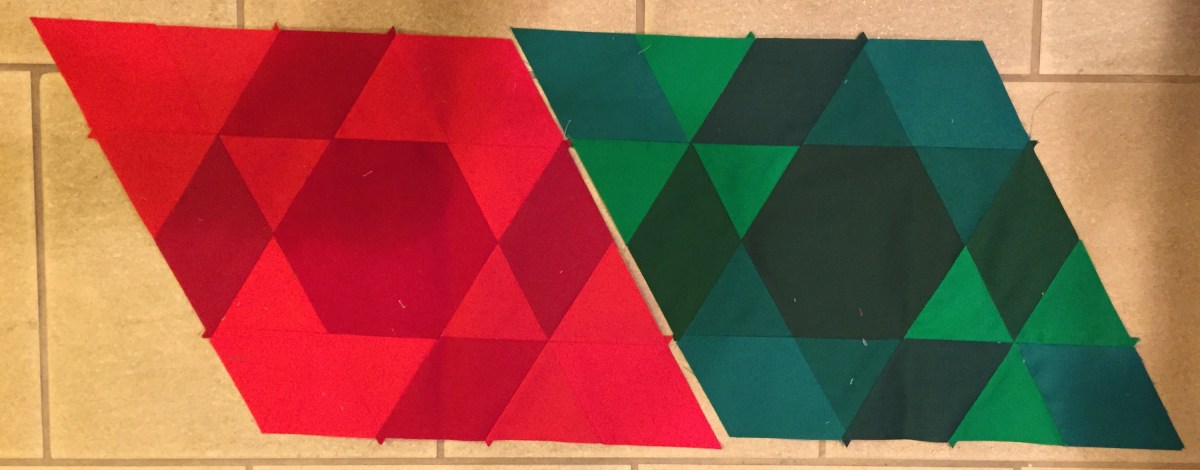
Here is block 7. 


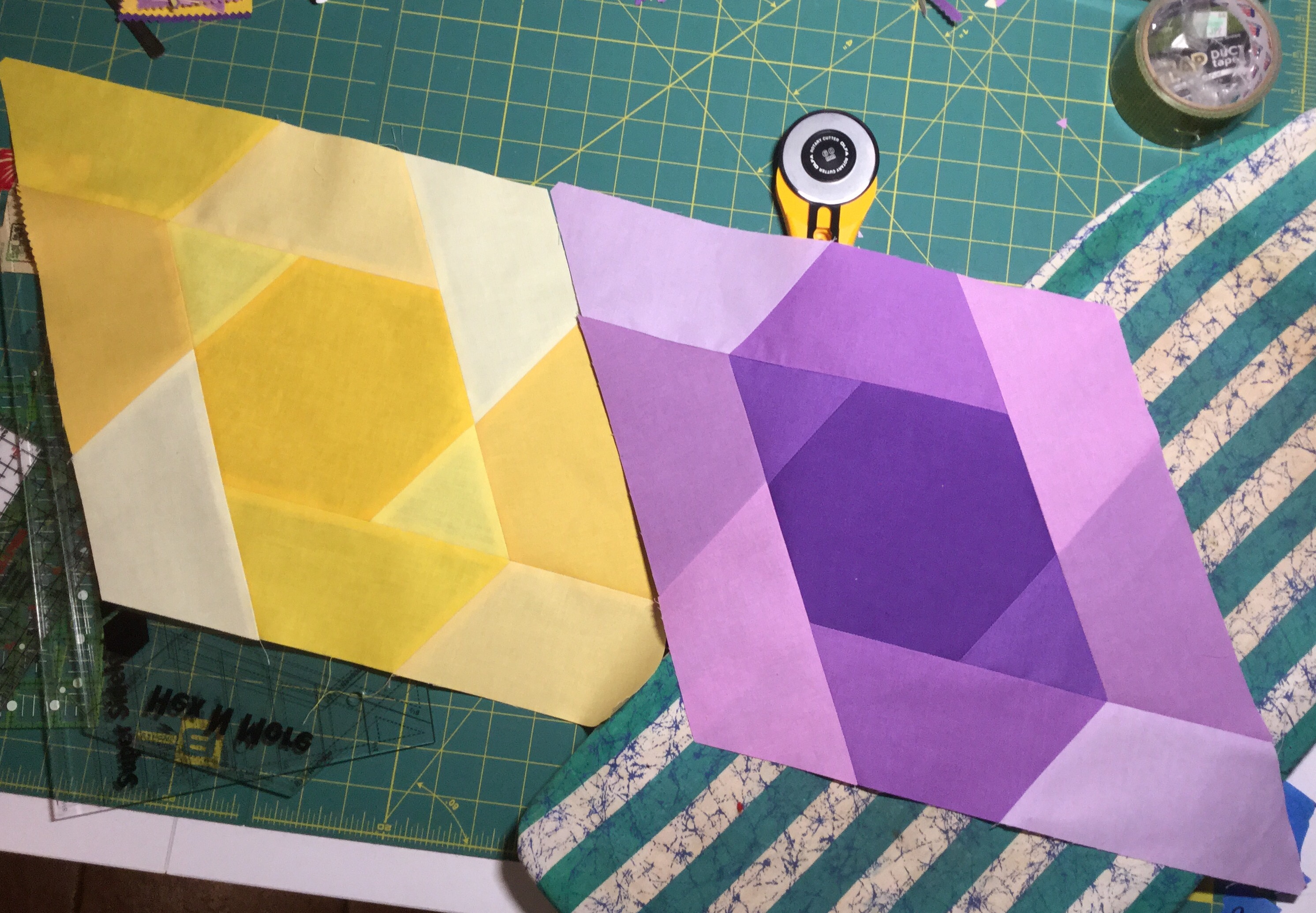
Gravity Block 6 – Ultraviolet

Wow, it’s been a busy month. I’ve been home, gone, had cousins visit, made new friends, had family visit, closed a retail shop, dug into work on another one, and am volunteering for a friend who is putting on the Sassy Southern Sewing extravaganza. Not my normal type of sewing, but I am sure I’ll learn a lot helping at this garment oriented event. 

Oh yea! And I got up on water skis! For more than two seconds. I really really skied half way around the lake! Yay!

I finally made time tonight to cut and sew together block 6. This is called Ultrviolet. It requires a partially open seam that is finished at the very last. It actually went together pretty fast. Lots of bigger pieces and only two triangles in this block. There is so much bias in these pieces! I have learned that starching, or in my case using Best Press, until the fabric is like cardboard really helps this #GravityQuilt go together more quickly, requires almost no pins, if any, and helps a ton. It feels good to sew.  


Gravity was intimidating but now it’s not. 

I saw a quilt kit that really wowed me. I usually grab a kit that’s on sale just for the fabric bundle. This kit by Jaybird Quilts is simply beautiful. And looked really complicated. Normally I stay away stars, but I have a compulsion to do this one. Using a special set of rulers (you can make this quilt from templates), Inhave found this is way easier than it looks. Lots of best press to stiffen up and prevent bias cuts from stretching it helping too. 

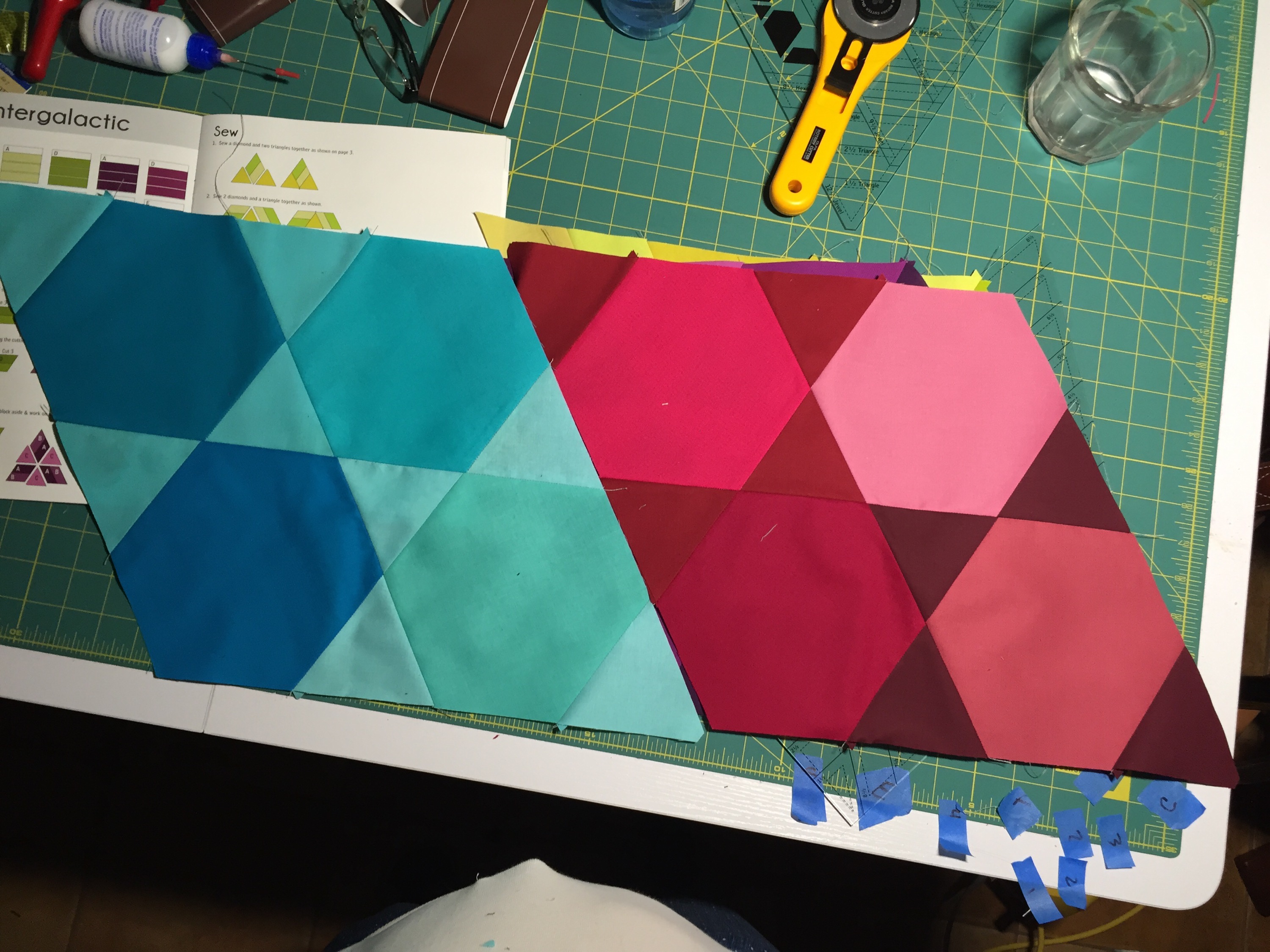
Here are my first four blocks for my #GravityQuilt


You Should Sell Those: A Play in Three Short Scenes, with Commentary

Catbird is so eloquent. I could not have said this better about pricing quilts or art for that matter.

Melanie McNeil's avatarCatbird Quilt Studio

Scene 1
[Setting: small town library reading room. Characters: paint artist and quilter.]
Artist: You should sell those!
Quilter: No one would pay me what they’re worth.

Scene 2
[Setting: quilt shop. Characters: quilt shop clerk and quilter.]
Clerk: For the women who make the quilts we sell, it’s really a labor of love.
Quilter: If I’m going to put that much love into a quilt, I’ll give it to someone I love.

Scene 3
[Setting: quilter’s living room. Characters: professional musician and quilter.]
Musician: You should sell those!
Quilter: No one would pay me what they’re worth.

The End


All three of these scenes have happened to me in the last few weeks. I relate these to you because there’s been a lot of discussion recently about the value of hand-made crafts. I’ll use quilting as my frame of reference, but the discussion surely applies just as well to…

View original post 827 more words

Like Jewels in a Treasure Chest

Catbird has it right. Many quilters undercharge for their work and many people do not value time and effort. Catbird spells out why she would charge several hundred for a baby size quilt. I completely agree with her. People have asked me to make quilts for hire for them. I tell them what it would cost and what I expect to make per hour for designing, cutting, and assembling it. All of them have backed out. I am OK with that. I’d rather spend that time and effort on a friend anyway and have the quilt with someone who would care for it with the same intensity it took for me to make it.

Melanie McNeil's avatarCatbird Quilt Studio

[Note: I wrote this post a couple of years ago, before starting Catbird Quilt Studio. The audience for that post was primarily non-quilters.]

Close your eyes for a moment and imagine a quilt, perhaps one from your past, perhaps one you are making yourself, perhaps a dream quilt. I see colors spilling forth, like jewels toppling from a treasure chest, tumbling onto the sand, glimmering, gleaming in the sun. I see leaves cartwheeling from trees in fall, nestling on the ground in patterns of dark green, plum, scarlet, gold. I see stark contrasts of blood red on snow. I see muted browns and double pinks, plaids and paisleys and calicoes.

I am a quilter. Often when I say this, people will respond by saying, “My grandmother was a quilter. I’m glad to know people still do that.” Yes, people still do that. According to Quilters Newsletter and the Quilting in…

View original post 806 more words

Bernina 830 versus Janome MC15000

My conclusion, each of these machines has pros and cons. I COULD live with either one. But I am lucky that I can afford both. So I generally piece quilts on my Janome, MC1500, while I appliqué and free motion on my Bernina 830. I will use either machine during embellishing art quilts depending on what stitches or effects I want. I embroider much more on my Janome because of the ease of monitoring and changing thread (nice threader).
I have been a member of the The Quilt Show for several years. Recently we started a thread about machines and features. I felt compelled to write about my two favorite machines. Here is what I posted to the forum on the Quilt Show.

Since a few have posted about their Bernina 830 experience. I thought I would too. I did not get a lemon and I absolutely love my 830. It is a solid workhorse for me. It takes any thread I throw at it even metallic. And I love the huge hoops. I also have a Janome MC15000 and I like it too. However it doesn’t free motion as well. It straight stitches better. However the Janome has a tendency to have nesting thread on the beginning of a stitching line. The Bernina does not.

Here is my experience Bernina 830 vs Janome MC15000

Straight stitching: Janome wins with a beautiful straighter stitch but with the caveat to use a bit of scrap material to start other wise I get a rats nest on the bobbin thread at the beginning of a stitching line. Holding the top and bobbin works too, BUT who wants to do that if they have an automatic thread cutter. You can attain a very nice straight stitch on the Bernina if you use a single hole plate, and carefully match your thread to needle size. But still Janome’s is a prettier straight stitch.

Thread cutter: both machines will cut thread. I think cutting is faster on the Bernina than on the Janome (this is an impression, not measured with a stop watch). Bernina sews without nesting after using it’s cutter. Janome will form nests if you sew after the cutter. On the Janome you will need to use a bit of scrap or pull out and hold the thread tails when you start sewing again.

Freemotion: Bernina wins hands down, no contest

Needle threader: Janome’s is better and more consistently threads the needle. Both machine’s needle threaders work better than my lower end machines.

Heavy or lots of layers : It really depends. Heavy tight weave several layers like quilting on a denim from denim backed with batting, I use my Bernina. Thick tough fabrics like cordura 400 or 600, I use the Bernina. The Bernina doesn’t skip stitches like the Janome can in situations like this. “This” is comparing same thread, same needle, same fabric, same number of layers, and sewing at half speed machine, etc. I do like the dual feed on the Bernina, especially when piecing flimsy or wispy light weight chiffon or silk fabrics. BUT! I like the ease of adjusting the pressure for the dual feed on the Janoma. I think the dual feed on the Janome is better for normal quilting cotton and cotton batting. I go to my Janoma for doing straight stitch quilting in a modern quilt kind of look where you would quilt with lots of straight lines or expanding circles or spirals. Bernina actually recommends an extra walking foot for this kind of quilting.

Embroidery: Both work great. Both do a great job. But due to thread change on these single color machines, I prefer the Janome because of it’s more consistently working needle threader. (though I Think the thread path on the Bernina is easier to do). MC15000 has an extra pro: I like the fact this machine is wi-fi capable.. that I have an app on my iPad that I can ‘see’ where in the process the embroidery is, if thread broke, if the machine stopped, and if i need to change colors. I can run around my home and do chores while doing embroidery without having to check to see the status of my machine. I actually get more embroidery done because of this.

Knee lift: have to put two paragraphs one for each machine explain this one.

Pro for the Bernina is that the knee life is mechanical. This makes doing appliqués more fun on the Bernina instead of the Janome. I can barely raise or take the pressure off the fabric when turning curves or corners and still have some pressure from the foot helping me keep things lined up and it acts like an extra hands. On the Janome, the knee lift seems to actually be an electronic switch, when I use the knee lift, there is no infinite range of lifting the pressure foot, it is either up or down. I don’t like this. So I typically do appliqué on my 830. (I also prefer the double blanket stitch the Bernina has over the similar stitch on the Janome).

Pro for the MC15000 is the knee lift will set to control other things besides lifting the presser foot, you can use it to control stitch width. Yes, really! So for an art quilter, I can use it for neat effects. I also use it when couching lumpy irregular yarns and other items to art quilt while embellishing. It’s very fun once you learn how to control it.

Conclusion

My conclusion, each of these machines has pros and cons. I COULD live with either one. But I am lucky that I can afford both. So I generally piece quilts on my Janome, MC1500, while I appliqué and free motion on my Bernina 830. I will use either machine during embellishing art quilts depending on what stitches or effects I want. I embroider much more on my Janome because of the ease of monitoring and changing thread (nice threader).

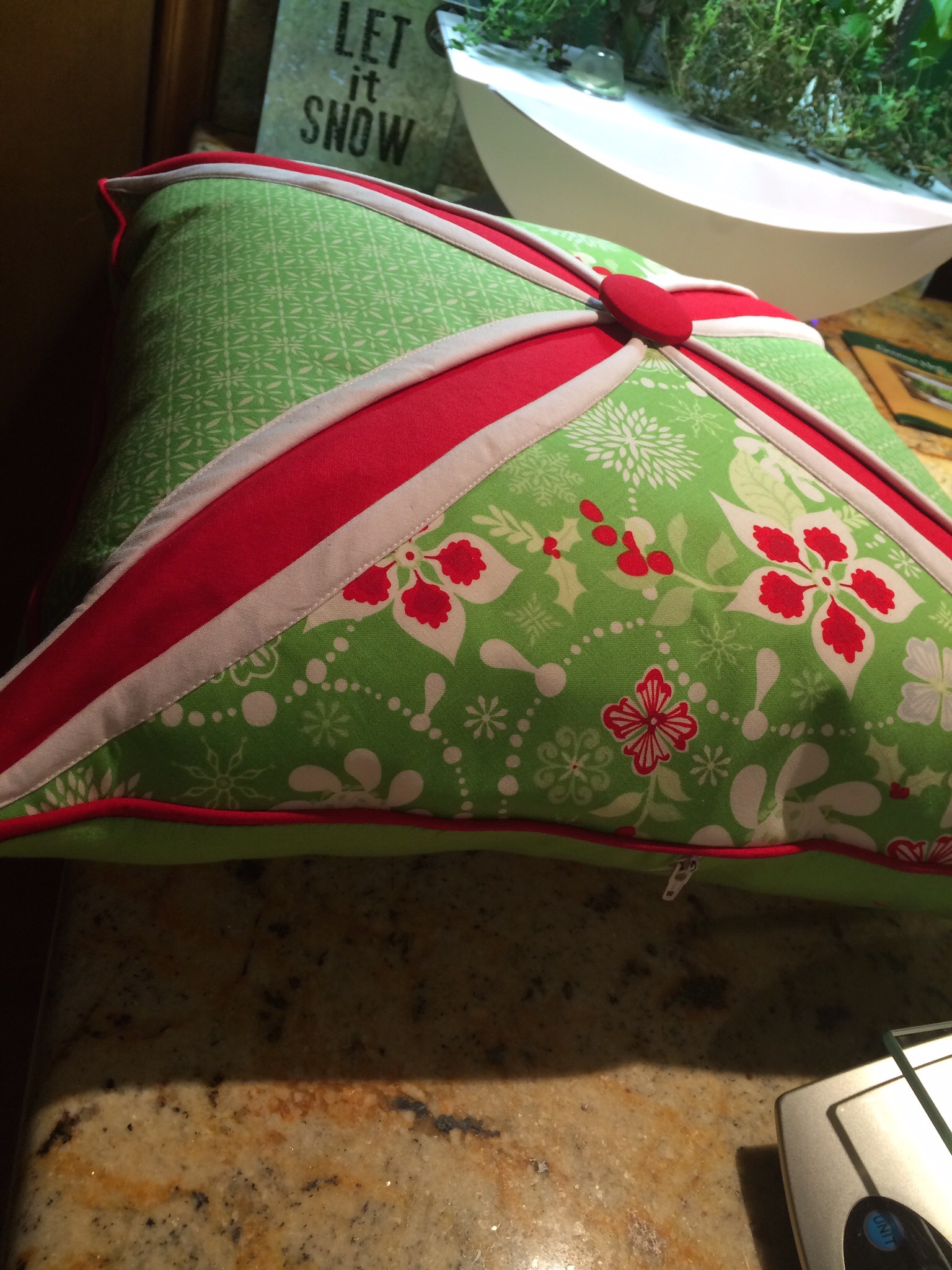
Pillow swap from Dec 2014

Cathedral Window Pillow
Piped edges, zippered back, cathedral window block, pillow

I forgot to post a pic. This was the pillow I made for the San Antonio Modern Quilt Guild pillow swap. I saw a cathedral window block and knowing it’s pretty traditional figured it was so pretty and if I followed the make it big, it could squeeze under the modern category in a slight way. The person who ended up with it, let me know that she really liked it. I learned a new technique and had a lot of fun.

There Is A Philosophy of Monoprinting?

Glad I asked me that…

There is serendipity and a leap of faith in the act of monoprinting. Faith is something we all need more of.

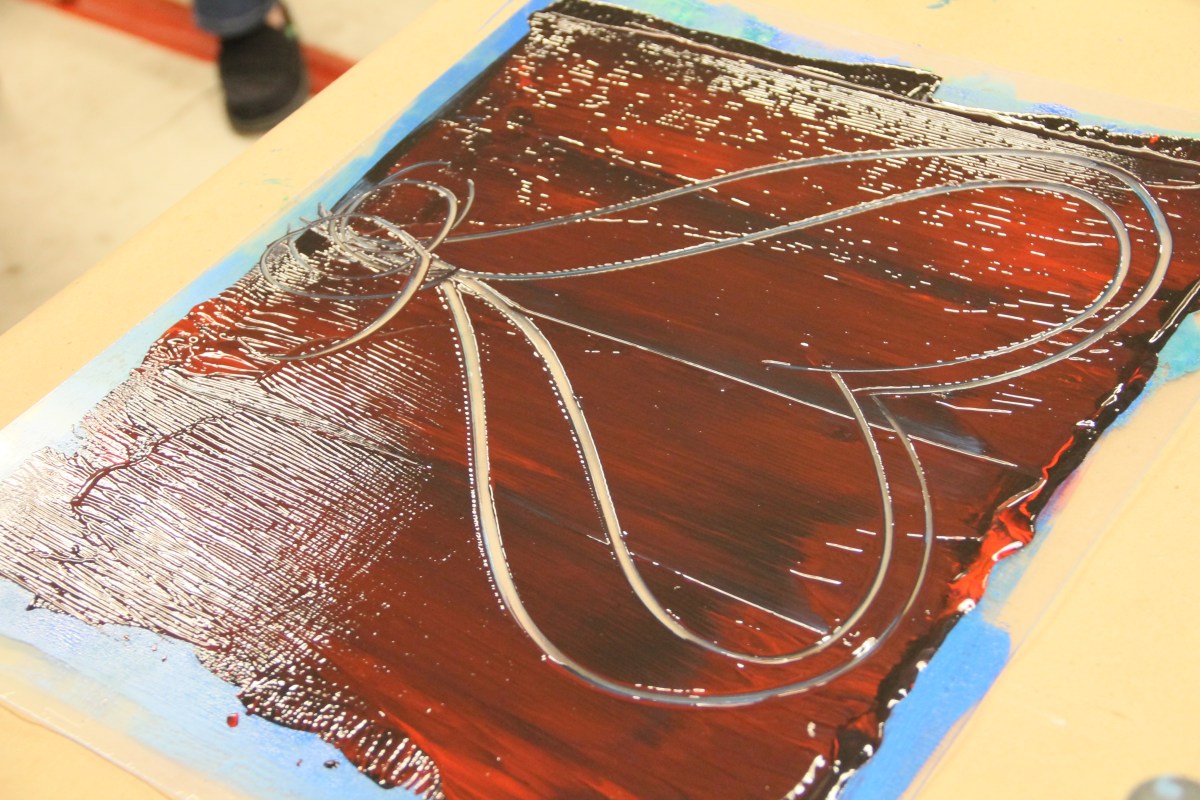
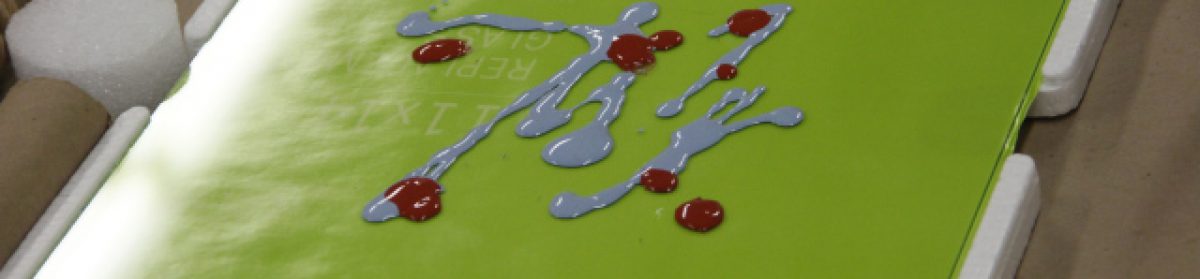
Most printmaking is all about making hundreds or thousands of copies of something all the same. Mono printing isn’t like that at all. The genius of monoprinting is that it is a one shot deal. Every print you make will differ.

In mono printing, you spread paint on a surface and transfer it to another surface. You can manipulate the paint in-between if you wish. You can manipulate the surface you put the paint on and you can manipulate the surfaces you press onto the paint. But you can never identically reproduce the exact same chaotic placement of every bit of paint. You can make things similar, but never identical. So you can make coordinating prints that look really good together for triptychs or series of art objects.

All that similar but different concept attracts me to it. Kinda like how I am attracted to people. I love that people are different. If we all were the same and had all the same ideas, and all the same way of doing things, the world would be a really boring place. Monoprinting also appeals to the scientist in me. One of my favorite classes had a section on chaos theory and how organization comes from disorganization. Monoprinting is a bit like that.

You could put paint right on the fabric but it just won’t look the same as monoprinting. You would lose that bit of specialness that monoprinting imparts. There is a spontaneity that we should all have in life and monoprinting is a kind of physical evidence of how a little chaos results in something wonderful.

Monoprinting can also change a fabric, it can tone down one that is too wild or it can add energy and interest to a fabric that is dull or boring. Sometimes a little dab of paint will do it. Same with people, animals, and things. All our experiences rub off on us and change us a little bit. Every encounter we have changes us a bit, every encounter changes the fabric. The more I think about it… there is a philosophy we can learn from monoprinting.

Once I get out of my introspective mood, I’ll write up another post about my low budget monoprinting presentation soon.

Luling Fiber Arts – February 2015

Denise wrote up a great synopsis of my presentation this past Tuesday. Mono printing is really fun and has so many applications in fiber arts like making quilting fabric and making rad fabrics, papers and printed materials for incorporating into art! I’ve printed fabric and paper so far. I want to try flattened tin next. What else could I try?

hollydeequilts's avatarHollyDee Quilts

Having been a very active member of my local quilt guild since 1997 I knew I would need to find a group to play with in our new location.  There is a very small group that meets once a month at the Luling Art League and members take turns presenting something new.  I like the idea that it is Fiber Arts – that will help get me out of my box!

Kelly is the organizer and she had recently attended the local SAQA meeting and was ready willing and able to share what they learned there.  It was called mono print – we used a bray (a tool for rolling paint smooth)  Glass and plexiglass but a jelly (sp) plate works better Kelly said.

Please note – while we used glass because it was what we had, care should be used if using glass not to press to hard as…

View original post 345 more words